
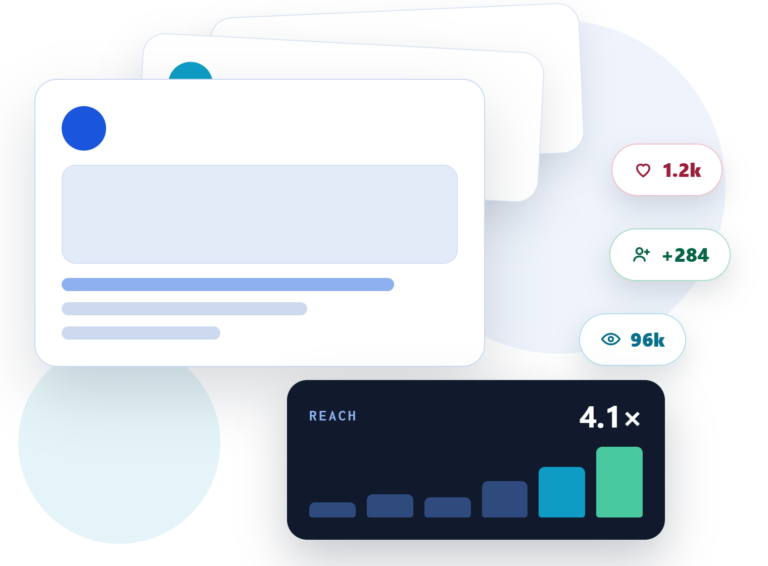
Posts That Reflect Your Brand, Not Just Another Template.
We build social content around what your brand actually stands for, made for the people who’d actually want to hear from you.
Why posting more doesn't move anything
Most brand accounts try to do four things in every caption: look active, sell something, sound relatable, and go viral. None of those are written the same way, so trying to do all four at once usually does none of them.
One post, four goals, no plan
A caption trying to sell, entertain, and go viral at the same time ends up doing none of the three.
Written for the algorithm, not the goal
Chasing whatever format is trending this week instead of the result you actually need.
Starting from a blank page every time
A blog post, a case study, or a client win sits unused, when it could already be five or six posts.
The wrong number gets watched
Likes get counted every month. If the actual goal was trust or leads, nobody's tracking whether that happened at all.
Our social media marketing framework
01
One goal per post or campaign
Before anything gets written, we agree what it's actually for, followers, trust, reach, or shares, and build toward that, not a caption trying to do all four.
02
Written for the platform it's on
The same win, posted on LinkedIn and on Instagram, doesn't read the same or perform the same. Same substance, different shape.
03
Your existing content, repurposed
A blog post, a case study, a press mention, broken into native social posts instead of starting from nothing. Social becomes a place your other content actually gets seen, not just where you post separately.
04
Measured against the goal you set
Follower growth if that was the goal, trust and reach if it wasn't, not whichever number happens to look good that month.
1 into 6
One existing blog post, case study, or client story can become six native social posts
You already have more to post than you think.
Our 5-step social media marketing process
Goal setting
What this account, or this specific campaign, is actually meant to achieve right now.
Audience mapping
Who you're trying to reach, and which platform they actually spend time on.
Content and repurposing plan
A calendar built from what you already have, plus what's worth creating new.
Posting and community management
Publishing on schedule and engaging with the people who respond.
Measurement against the goal
Not against whichever metric happens to look good that month.
Social media marketing FAQs
What if we want more than one goal, followers and trust?
Campaigns can layer over time, but each individual post still needs one job. Trying to do everything in one caption is exactly what makes it do nothing.
Does going viral actually help our business?
Sometimes, sometimes not, it depends what you're optimizing for. Reach without relevance brings the wrong followers. We'd only chase virality if that's genuinely the goal you need right now.
Do you also help distribute our blog or case studies?
Yes. Your social accounts are one of the places your other content gets pushed out and repurposed into native posts, not something published once and left alone.
How much content do you need from us to start?
Not much. A handful of case studies, wins, or existing blog posts is often enough to build the first month or two of posts while new material gets created.
Do you run paid social ads too?
No, this is organic content, posting, and community management. Paid social sits outside this service.
Find out what your social should actually be doing for you.
Get in Touch